Healthcare organizations have invested millions of dollars into patient room technology over the last decade. Digital whiteboards, patient televisions, door signs, tablets, virtual nursing platforms, and mobile applications are now common throughout modern hospitals.
Yet despite all of this technology, many healthcare leaders are still asking the same question:
Why aren't we seeing better patient engagement, better communication, and more efficient workflows?
After nearly twenty years working in healthcare technology, I've come to a simple conclusion.
The problem isn't a lack of screens.
The problem is that most hospital technologies were never designed to work together.
The Growing Problem with Hospital Room Technology
Walk through almost any hospital and you'll see an increasing number of digital devices throughout the patient environment.
Patient TVs display entertainment and education.
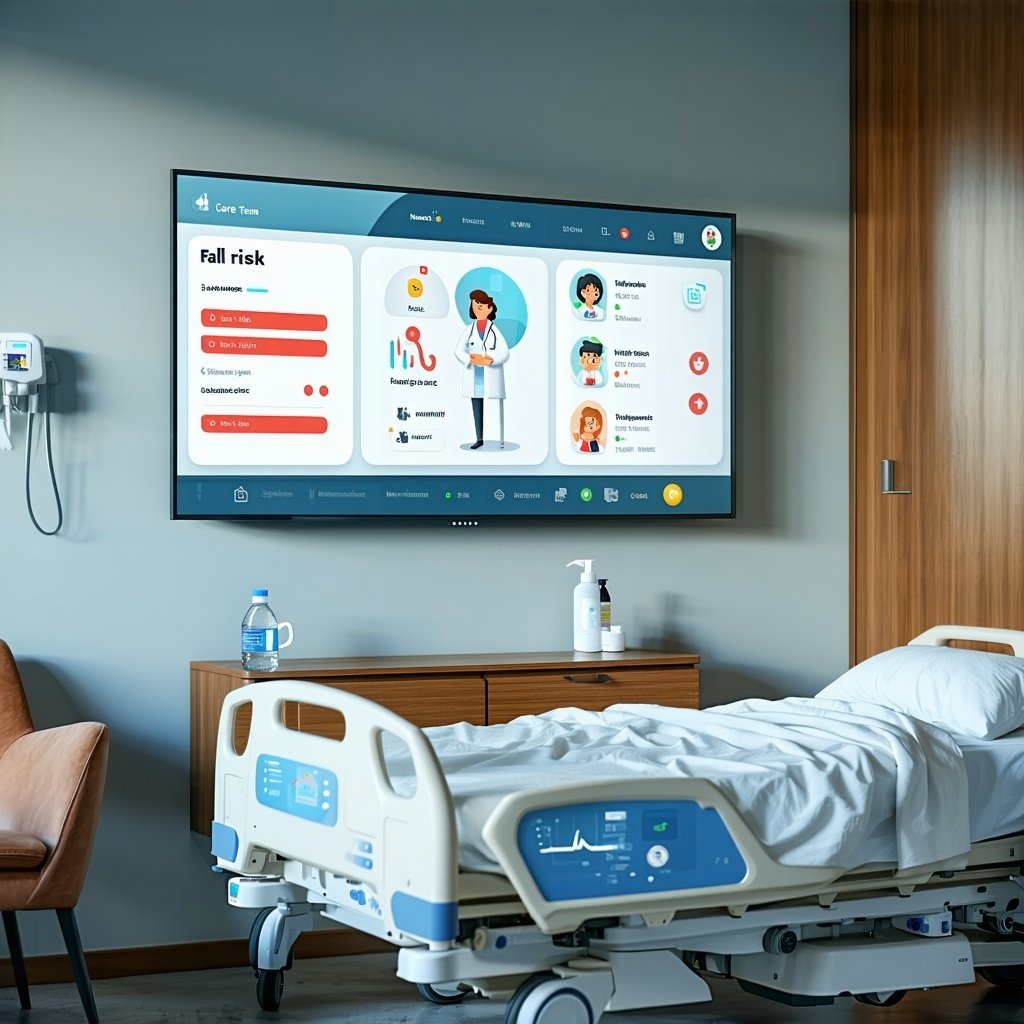
Digital whiteboards display care team information.
Door signs communicate room status.
Virtual nursing platforms support remote care.
Mobile applications connect caregivers.
Individually, these solutions can provide value. The challenge occurs when each system operates independently.
Information becomes trapped inside separate applications. Staff members are forced to navigate multiple systems. Patients receive fragmented experiences. Workflows become more complicated instead of more efficient.
This is what I call screen proliferation.
Healthcare organizations keep adding technology while the underlying workflow problems remain unsolved.
Why Many Digital Whiteboards Fail to Deliver Value
One of the biggest misconceptions in healthcare technology is that all digital whiteboards are essentially the same.
They are not.
Many hospital whiteboards function primarily as digital displays. They show information, but they don't create action.
A truly interactive digital whiteboard should do much more than display patient data.
It should launch workflows.
It should support virtual nursing.
It should connect with nurse call systems.
It should integrate with smart beds.
It should provide real time communication between patients, families, and caregivers.
Without those capabilities, a digital whiteboard often becomes little more than an expensive electronic poster.
Real Time Integration Matters
Healthcare moves in real time.
Unfortunately, many patient engagement platforms do not.
A patient becomes a fall risk.
A discharge order is entered.
A room requires cleaning.
A bed alarm activates.
These events require immediate action.
If information updates every fifteen minutes, every hour, or through manual intervention, staff are working from outdated information.
Modern hospital technology should support real time workflows across the entire patient environment.
Anything less creates inefficiencies and increases the potential for communication breakdowns.
The Hidden Question Every Hospital Should Ask Vendors
When evaluating patient engagement platforms, most organizations focus on features.
I believe they should focus on something else.
Who actually builds the software?
Many healthcare technology vendors rely on third party development firms to build and maintain their products. While that approach may work for some organizations, it often limits flexibility when hospitals need custom workflows, unique integrations, or specialized functionality.
Healthcare is not one size fits all.
Every hospital operates differently.
The ability to quickly adapt technology to local workflows often determines whether a platform succeeds or fails.
What We Have Learned from Twenty Years of Healthcare Integrations
At HCI, we've spent nearly two decades integrating healthcare technologies and almost ten years developing interactive digital whiteboards.
Over that time, we've learned that patient engagement is not a feature.
It is not a television.
It is not a whiteboard.
It is not a mobile application.
Patient engagement is an ecosystem.
When patient TVs, digital whiteboards, door signs, virtual nursing platforms, nurse call systems, smart beds, RTLS solutions, and electronic medical records work together, hospitals begin to see meaningful improvements in communication, efficiency, and patient experience.
That is where the real value exists.
Not in the screen itself.
In the connection between the screens.
Questions Every Hospital Should Ask Before Purchasing a Patient Engagement Platform
Before selecting your next patient engagement solution, ask these four questions:
- Is the platform truly interactive?
- Does information update in real time?
- Can workflows be customized without major development projects?
- Does the vendor build and maintain its own software?
The answers will often tell you more than a product demonstration ever could.
The Future of the Smart Hospital Room
The future patient room will not be defined by the number of screens on the wall.
It will be defined by how effectively those technologies work together.
Hospitals do not need more disconnected applications.
They need connected workflows.
They need integrated systems.
They need technology that reduces work instead of creating more of it.
Because the future of patient engagement is not another screen.
The future is a connected patient room ecosystem that brings every screen, every workflow, and every caregiver together.