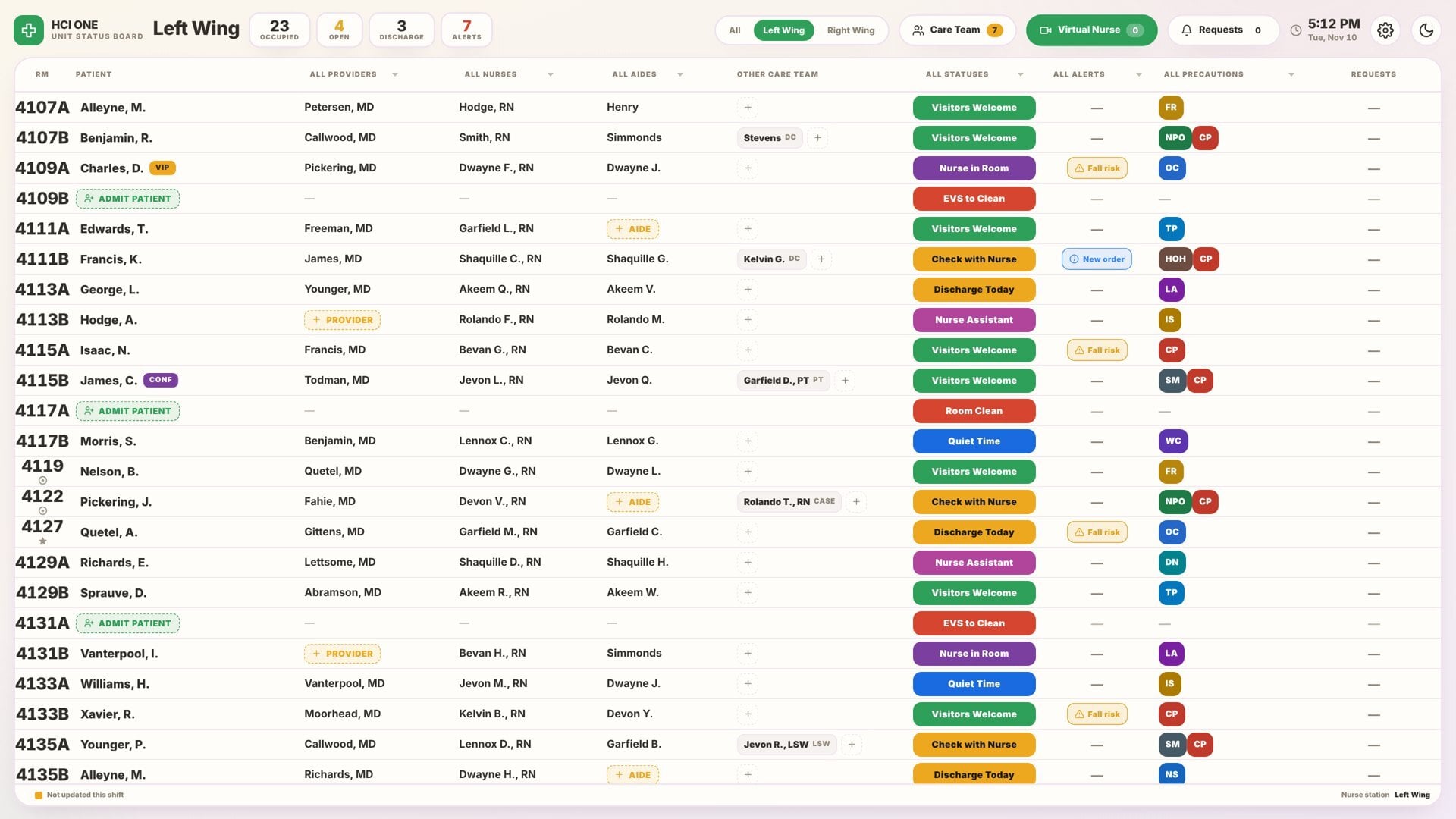
Every product we sell waits for something else to talk to it. The EMR sends the admit. Nurse call sends the call. Then our screens do something.
This fall a community hospital came to us with no interface engine and no modern nurse call. It is also not on the mainland. It is on an island. Nothing was going to talk to our screens. We had a product that sits there until another system tells it what to do, and there was no other system.
That is not the hospital's problem. It was ours. So we built the whole thing to run on its own.
It starts with a button
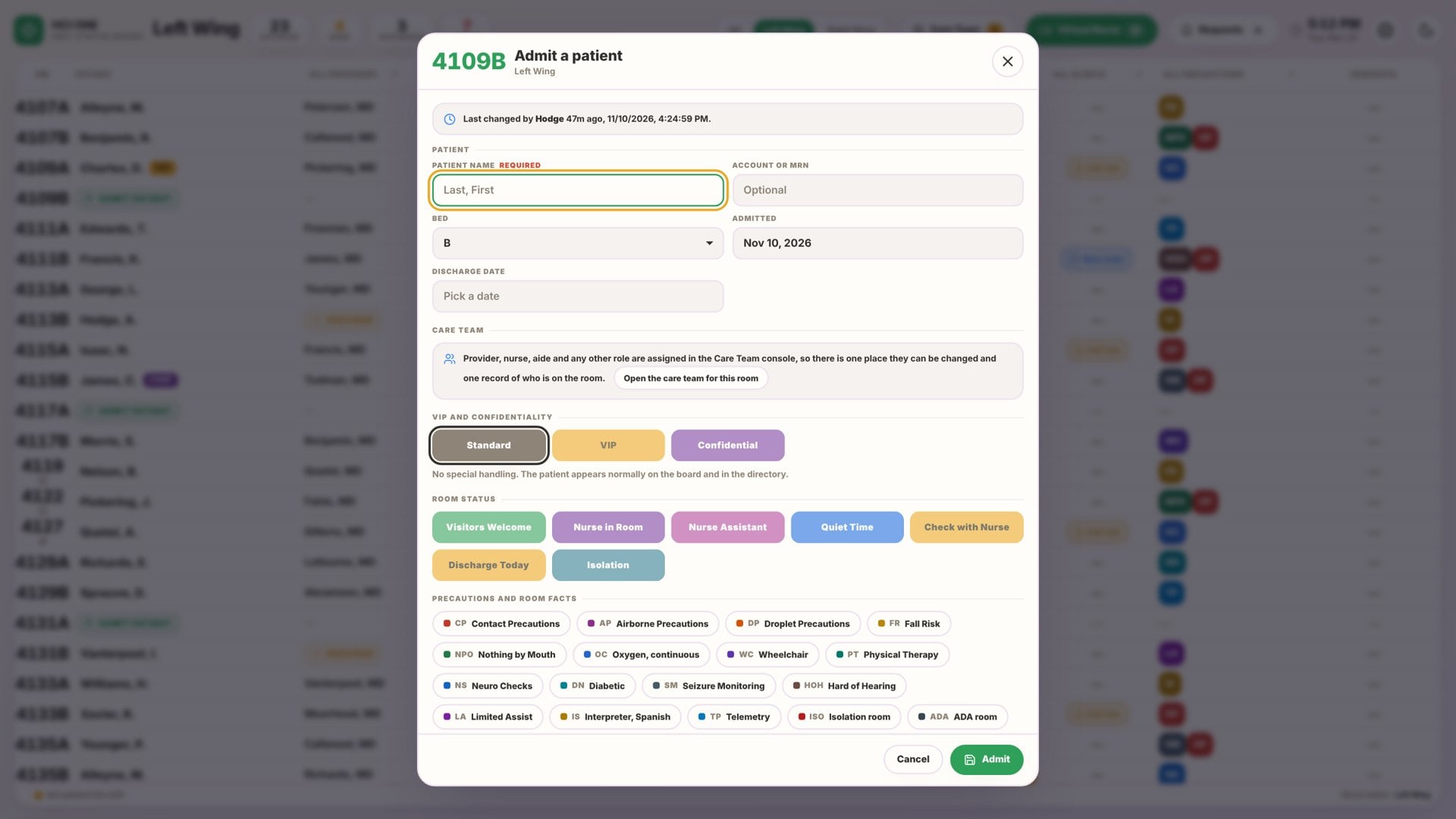
With no admit message, somebody has to tell the system a patient is in the bed. We built a button for that. It says Admit Patient. It is on every open bed on the board.
Staff type the name, pick the bed and the dates, and set the room status. They mark VIP or confidential. They tap the precautions: fall risk, contact precautions, nothing by mouth, interpreter, telemetry. They press Admit. The board changes.
That is the whole integration. It is a person.
Who is taking care of this patient
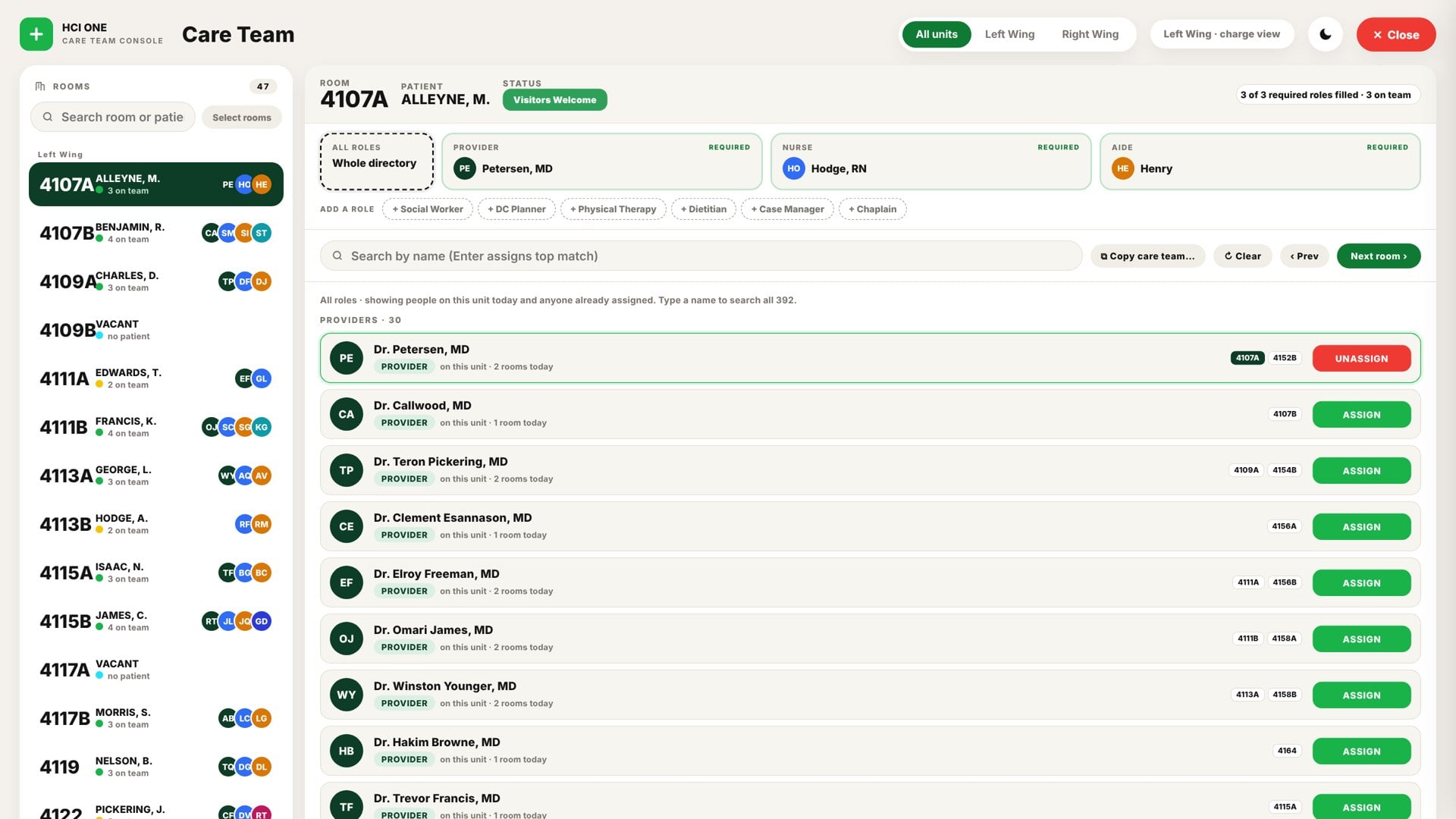
Nothing was going to tell us that either. So we built a care team console. The provider, the nurse and the aide are assigned in one place. So is anyone else on the room: social worker, discharge planner, physical therapy, dietitian, case manager, chaplain.
A charge nurse searches a name and presses Assign. She can copy a care team from one room to the next. There is one record of who is on the room, and the board shows it.
The tablet at the bedside
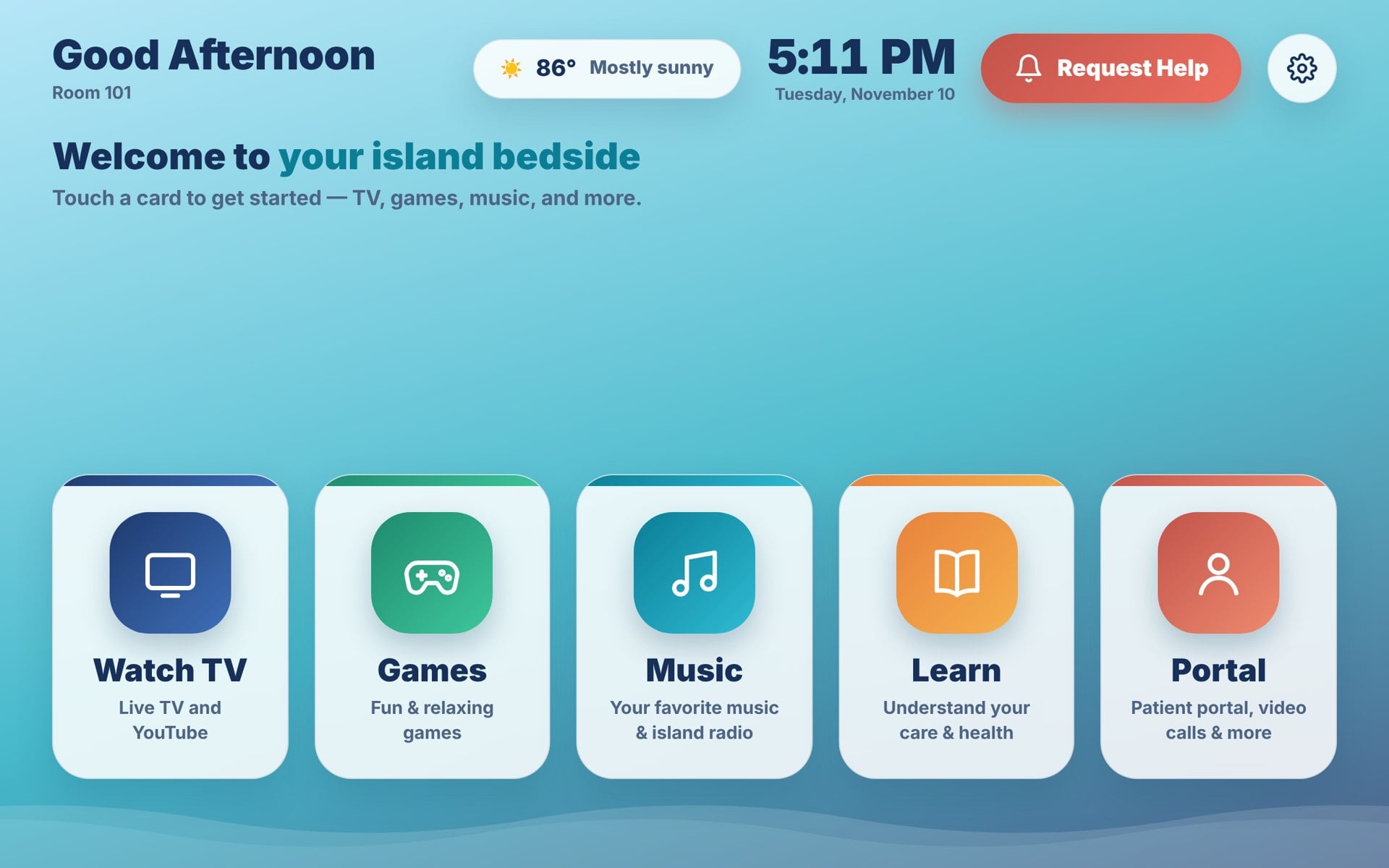
Every room gets a bedside tablet. The hospital picks the background. The patient gets five cards: Watch TV, Games, Music, Learn and Portal.
Nurse call, more or less
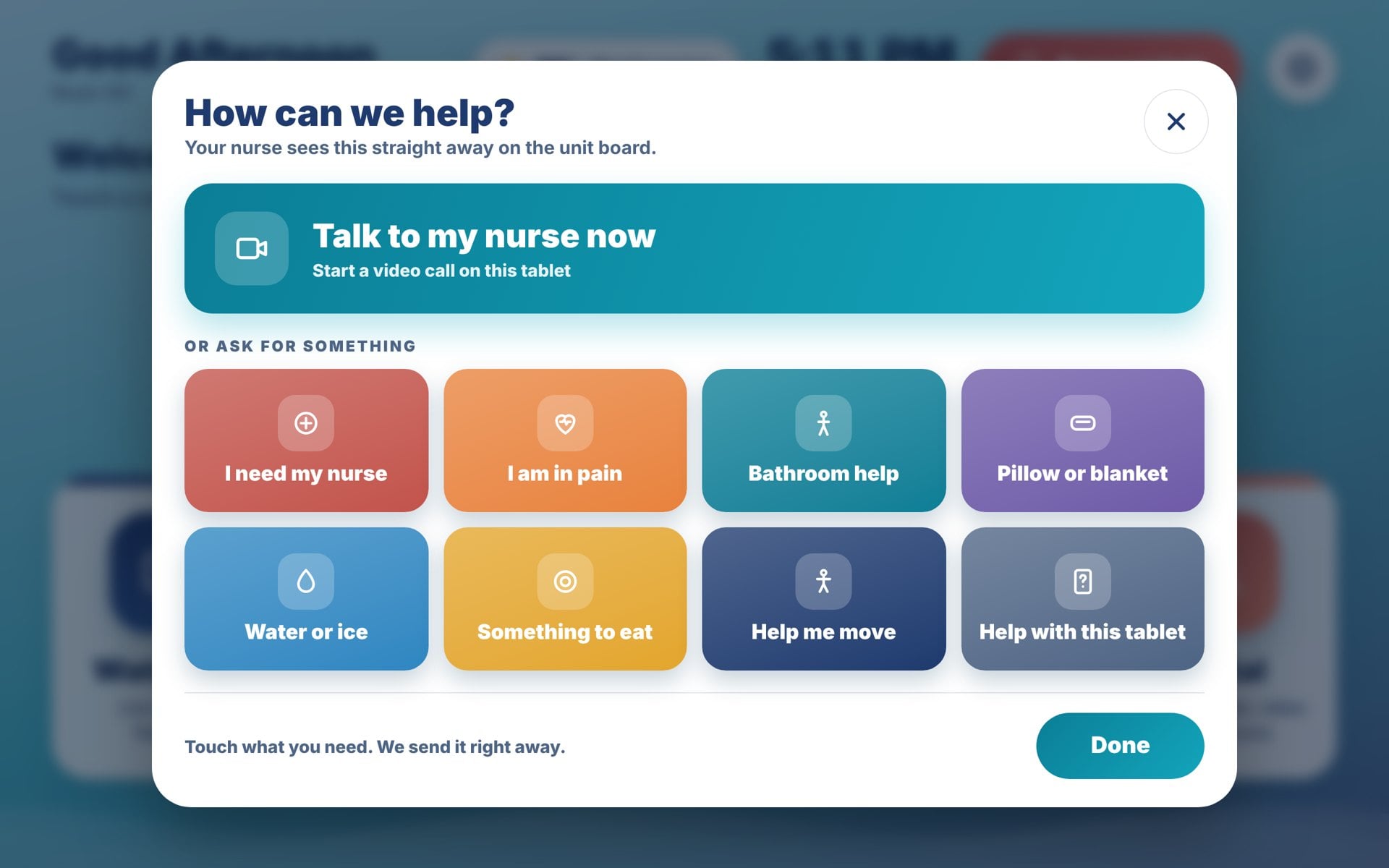
The tablet has a physical orange button on it. We made it open Request Help. The same button is on the screen, all the time.
The patient touches what they need. I need my nurse. I am in pain. Bathroom help. Pillow or blanket. Water or ice. Something to eat. Help me move. The eighth one is Help with this tablet.
The request shows up on the unit status board, on the row for that room. Nobody walks to the room to find out the patient wanted ice.
Then we added video
We added video calling as well. The first button on the Request Help menu is Talk to my nurse now. It starts a video call on the tablet. The nurse answers from the unit.
The next phase adds network PTZ cameras in the rooms.
The hospital runs it
The unit status board runs in a browser. The hospital manages the tablets from the board's settings: the backgrounds, the education content, the portal links and the Request Help options. The hospital decides whether patient names show on the board. They do not call us to change a button.
A device tool finds every tablet on the network and checks it every 30 seconds. It is included with the system.
This is not only for hospitals
By the end we had stopped building a hospital product. Any facility that tracks the flow of people and information has the same four questions. Who arrived. Where they are. What they asked for. Who is taking care of them.
A dialysis clinic has chairs instead of beds. A nursing home has residents instead of patients. A surgery center has a waiting room full of families. The four questions do not change. None of these places needs an EMR feed to answer them. They need a form, a board and a screen in the room.
What an interface is for
An interface saves typing. That is all it does. When the hospital gets its engine, the admit message can press the Admit Patient button instead of a person. Everything after the button stays the same.
We spent years treating the integration as the product. It is the last step.
HCI has been in business since 2002 and has installed more than 100,000 devices. HCI ONE runs on premise, inside the facility's own network. To talk through how your facility would track patients and requests, contact us below.
See the platform behind the writing.
Thirty minutes, real software. We connect HCI ONE to a sample chart and walk your scenarios.
Book a demo ← All posts