Field notes
Four companies, two days, and a set of robots parked at the end of the floor.
Last week we built a hospital room inside a warehouse.
Curtains for walls. Concrete floor. A roll-up door at the end of it. Our software ran on every screen in the room. Almost none of the hardware was ours.
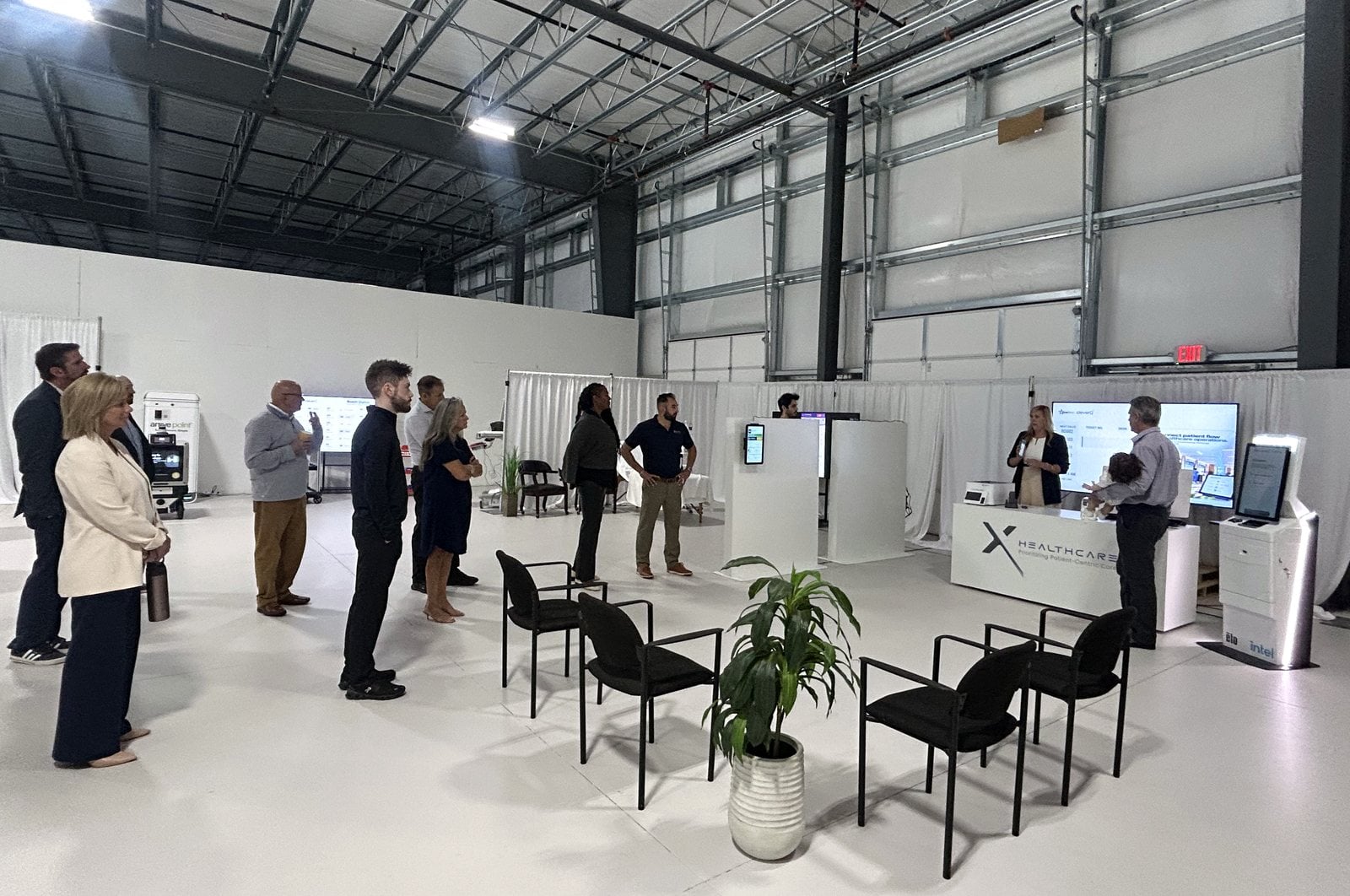
Elo made the displays. Zebra made the door sign and the handheld. Nexus AMR brought the robots. BlueStar put all of us in the same room, which is the part nobody photographs.
What was in the room
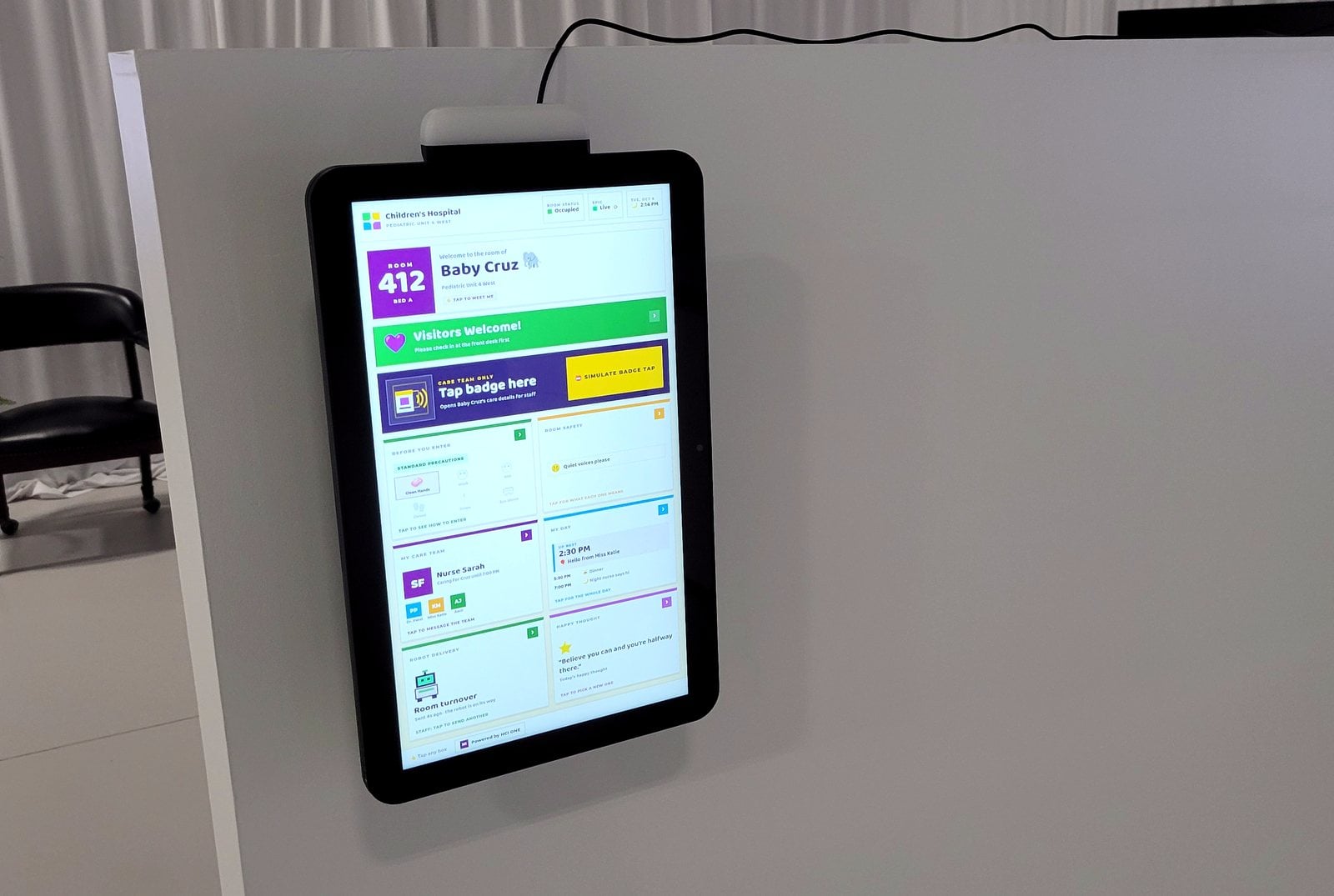
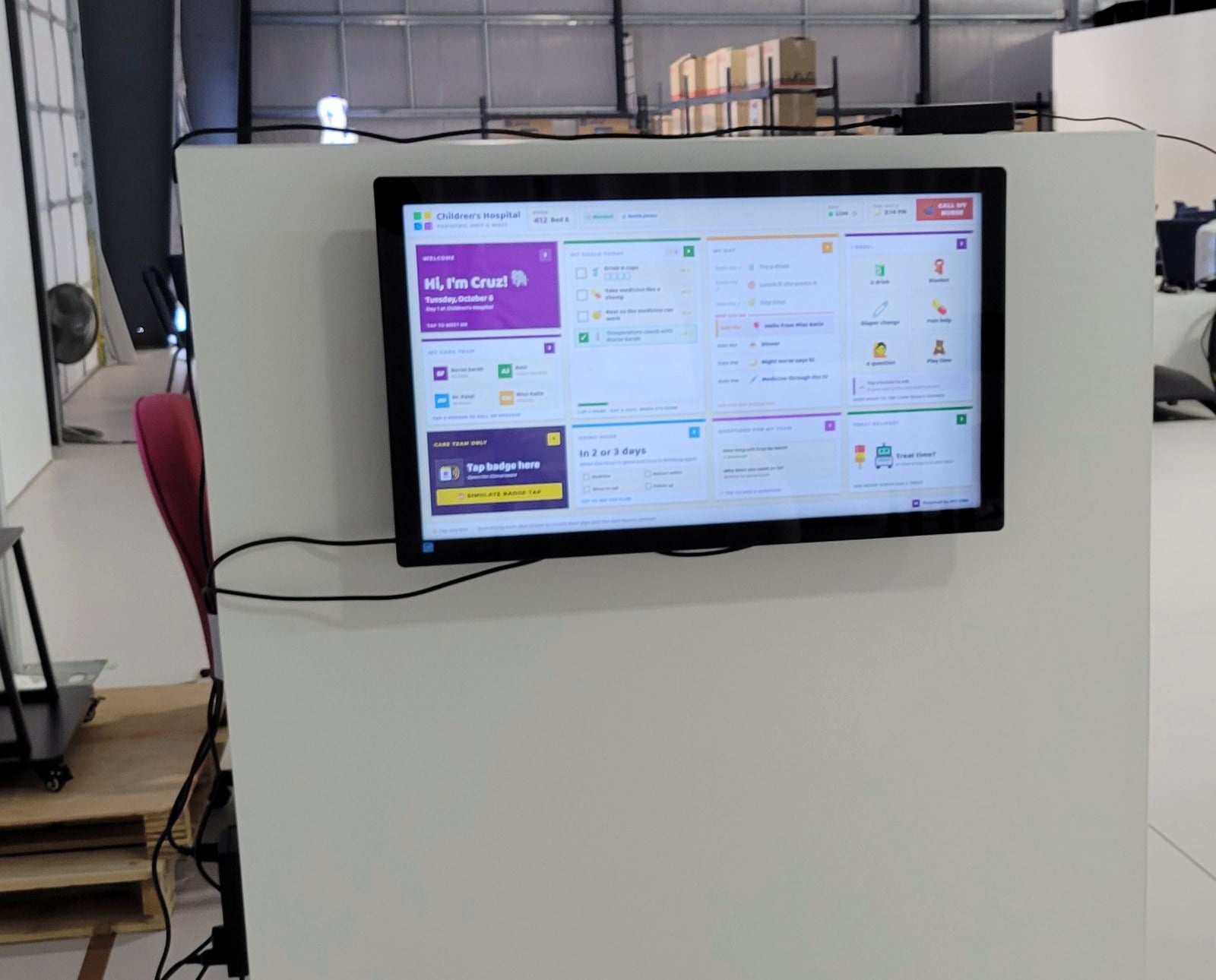
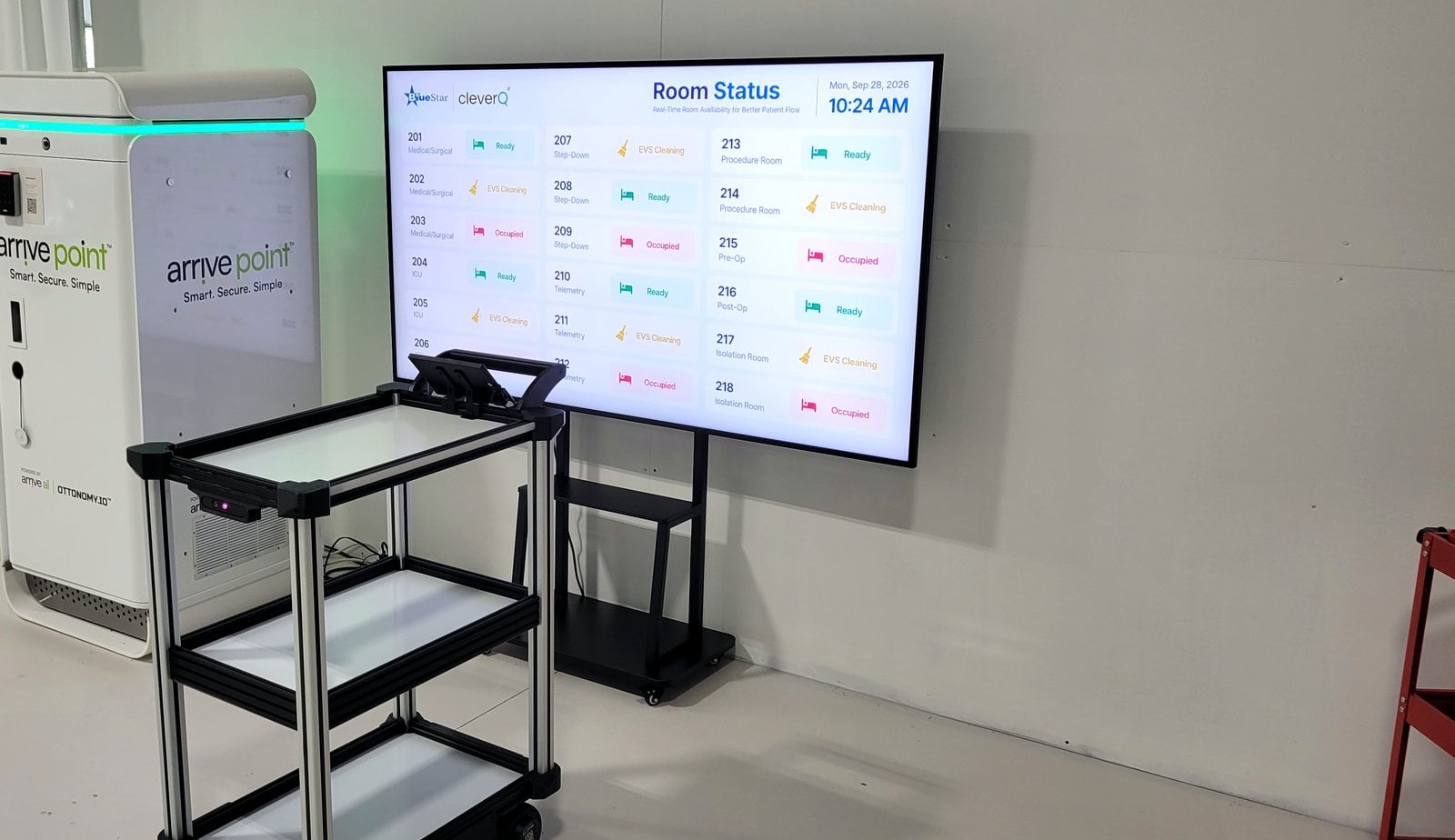
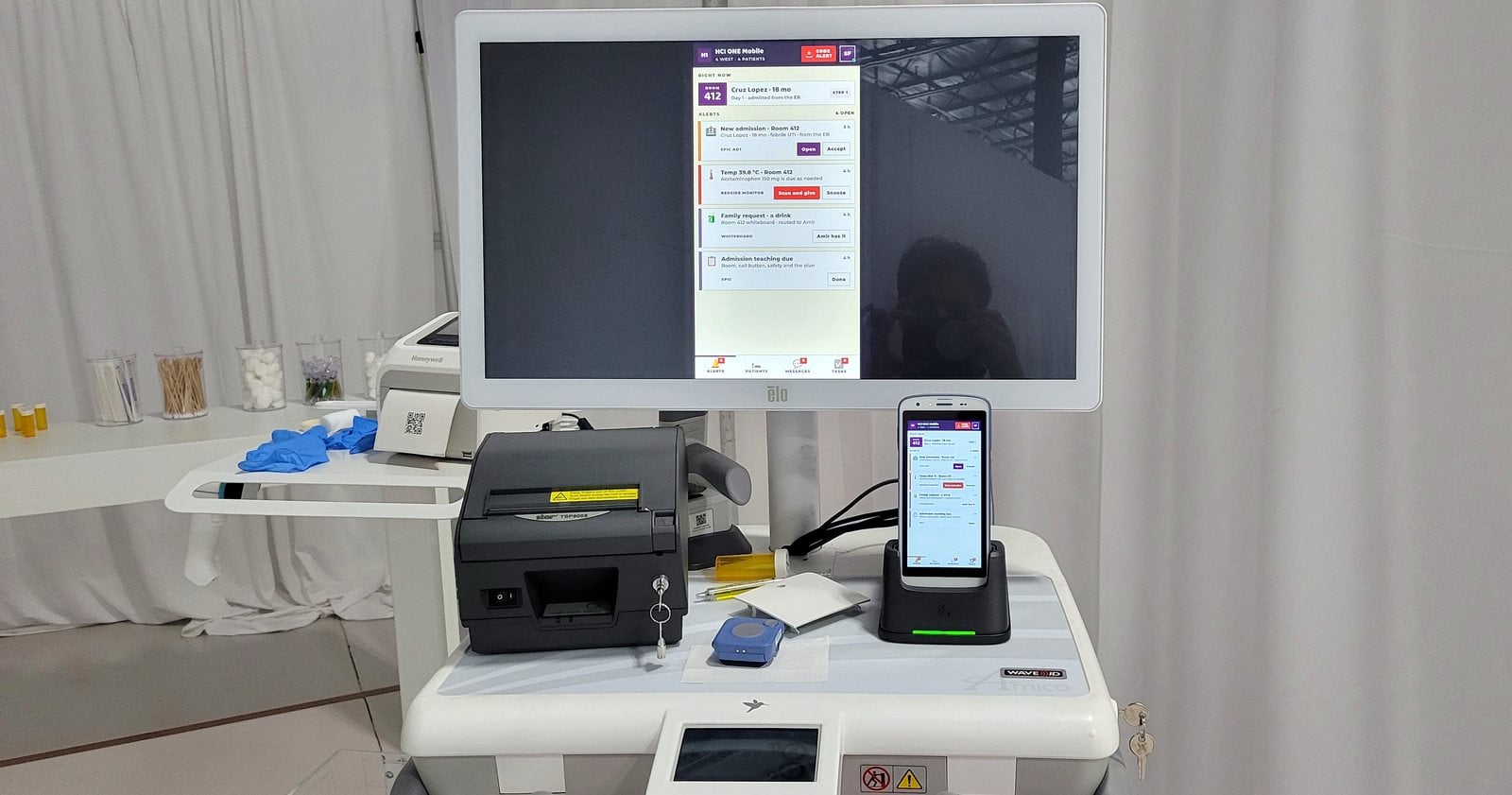
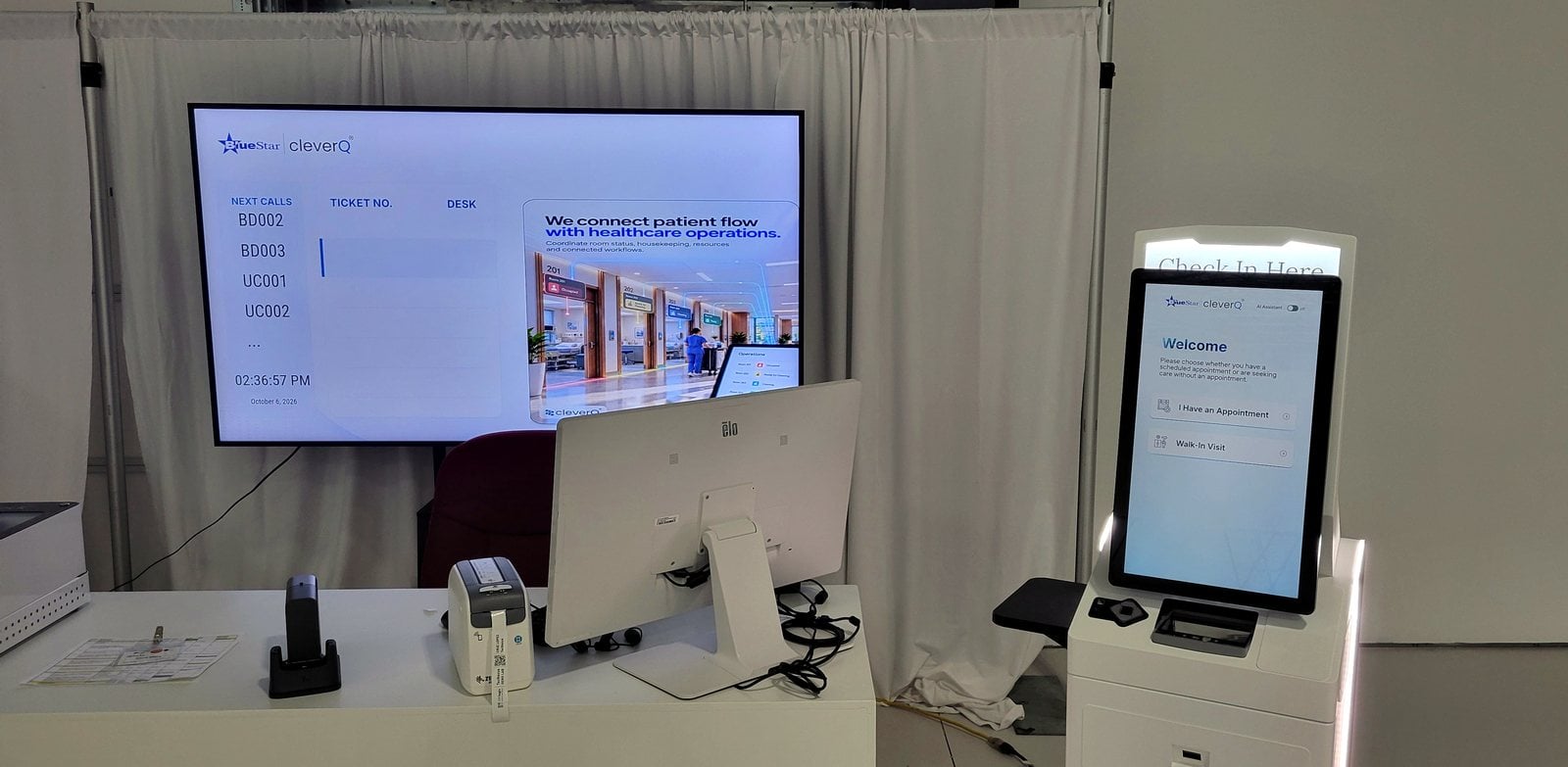
Four companies of hardware. One piece of software. Nothing on that list was built for a trade show.
The robots
The robots drive themselves. They know the building. They are better in a hallway than I expected.
We put three buttons on the room display. Cleaning. Delivery. Transport.
Press one and our app sends a request to the Nexus API. Same address, same key, every time. The payload says which task, which action, which robot. Nexus holds the maps, the routes and the waypoints.
We do not drive the robot. We ask for it.
That is the entire integration. It took days, because nobody had to write anybody else’s software.
Who brought what
None of this was us alone.
What I keep thinking about
For fifteen years the screen in a patient room has been a place to read things. The name of your nurse. Your schedule. Maybe a discharge date. One direction, every time.
Last week one of them asked for something and a robot answered. Robots are not the point. The point is that the screen already in the room turned out to be the right place to ask.
The curtains came down Tuesday night and it went back to being a warehouse. That room is the one we are trying to build for real.
Want to see it on your floor?
We will build it on your systems with sample data and walk the room through it.
Photos from the event. Every screen shown uses sample data. No patient information appears anywhere in this post.